The build story
A small start
Hobo began as a little printed frame from Thingiverse with yellow toy gearmotors. It was a good way to learn, but the plastic gears had too much slack for a robot that has to balance.
Proper motors, new chassis
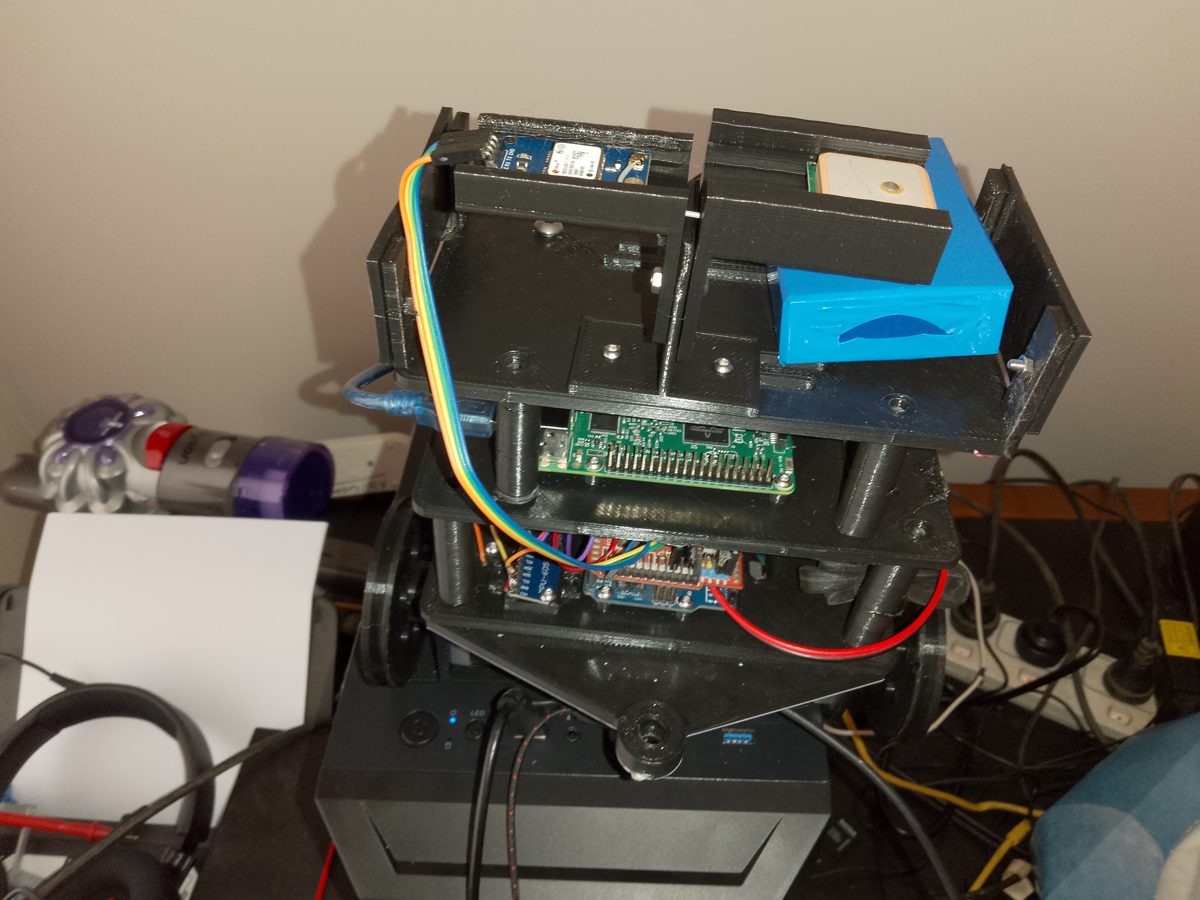
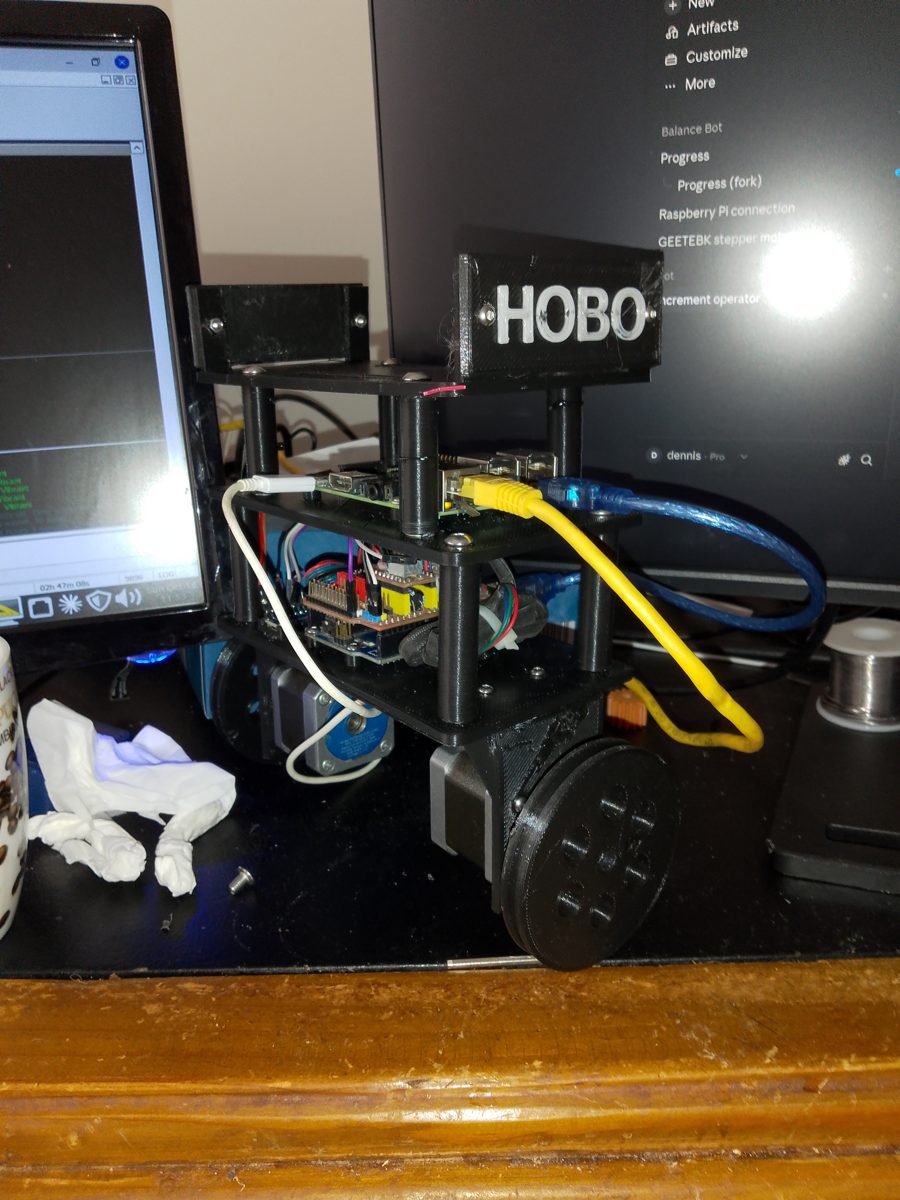
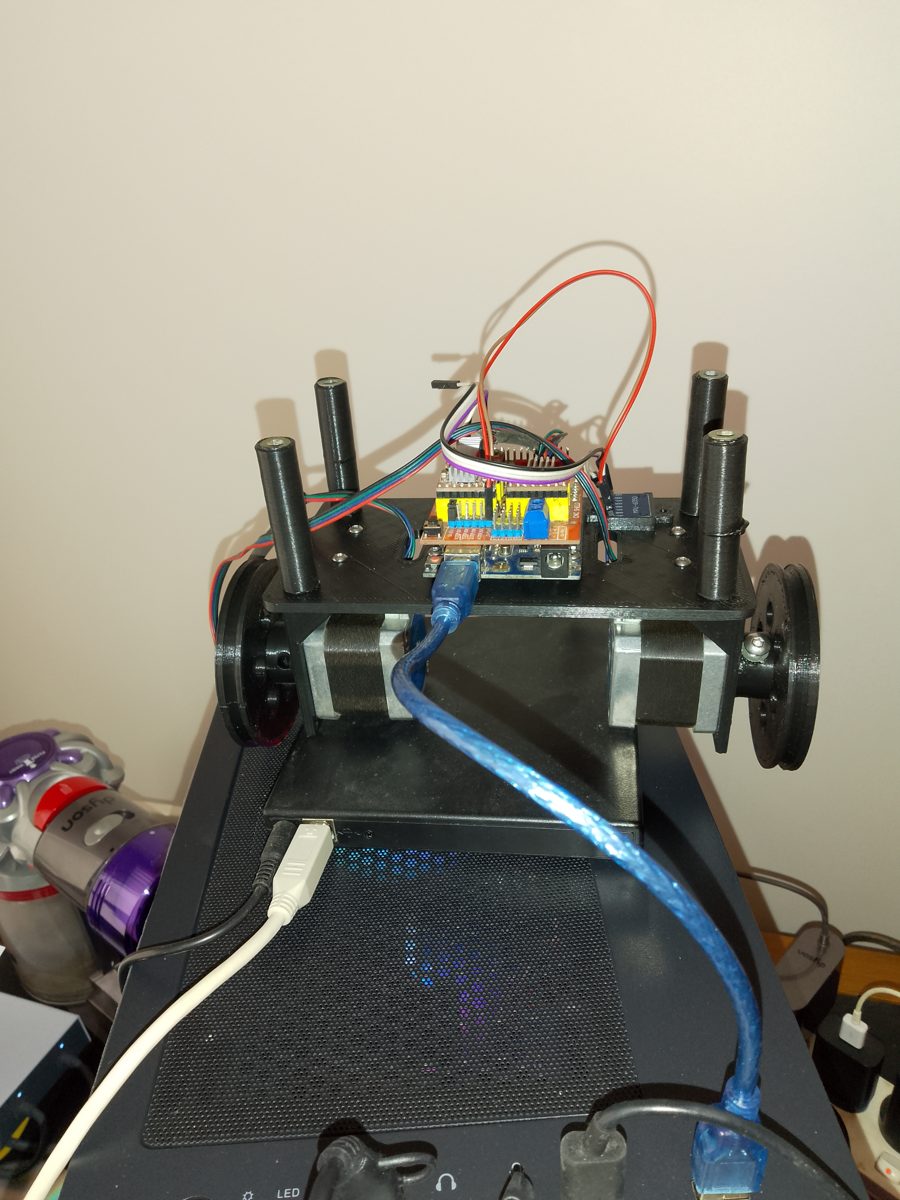
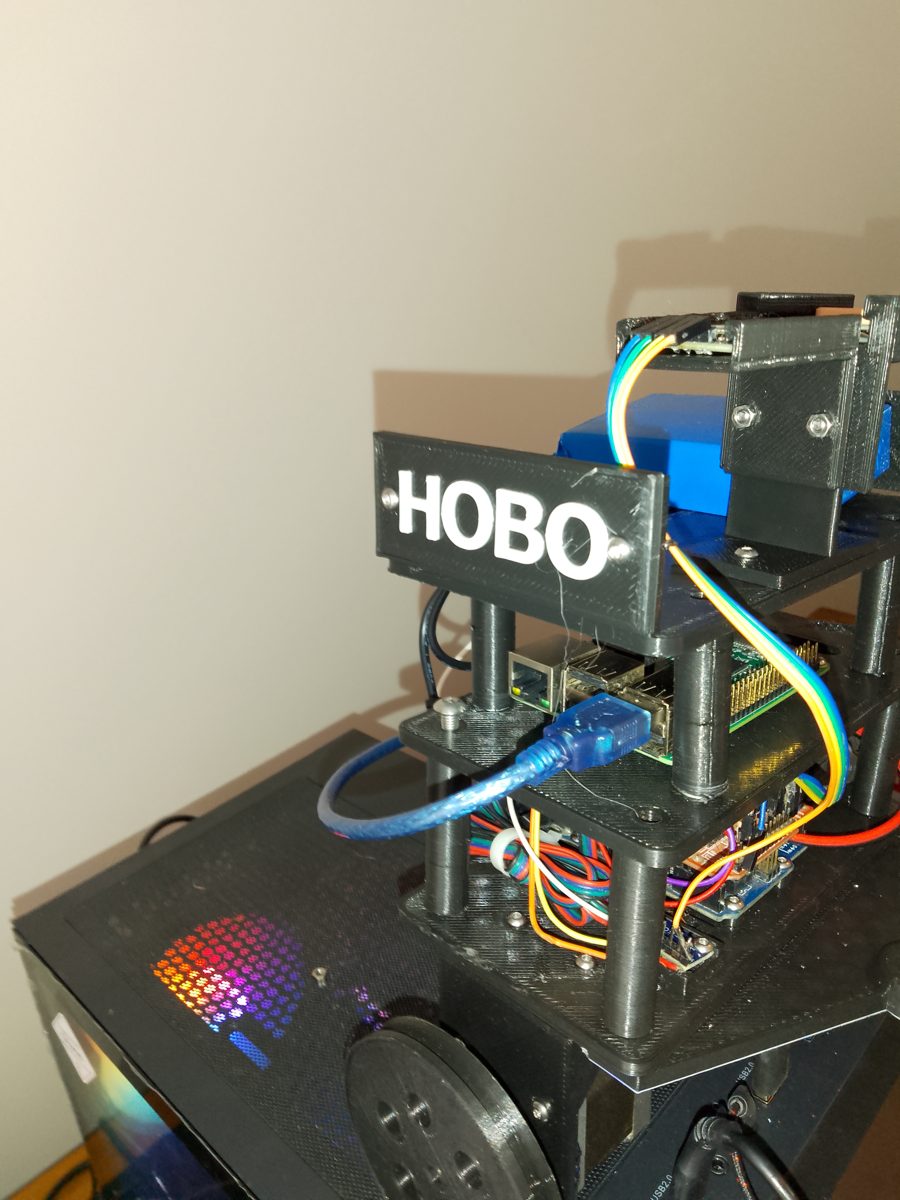
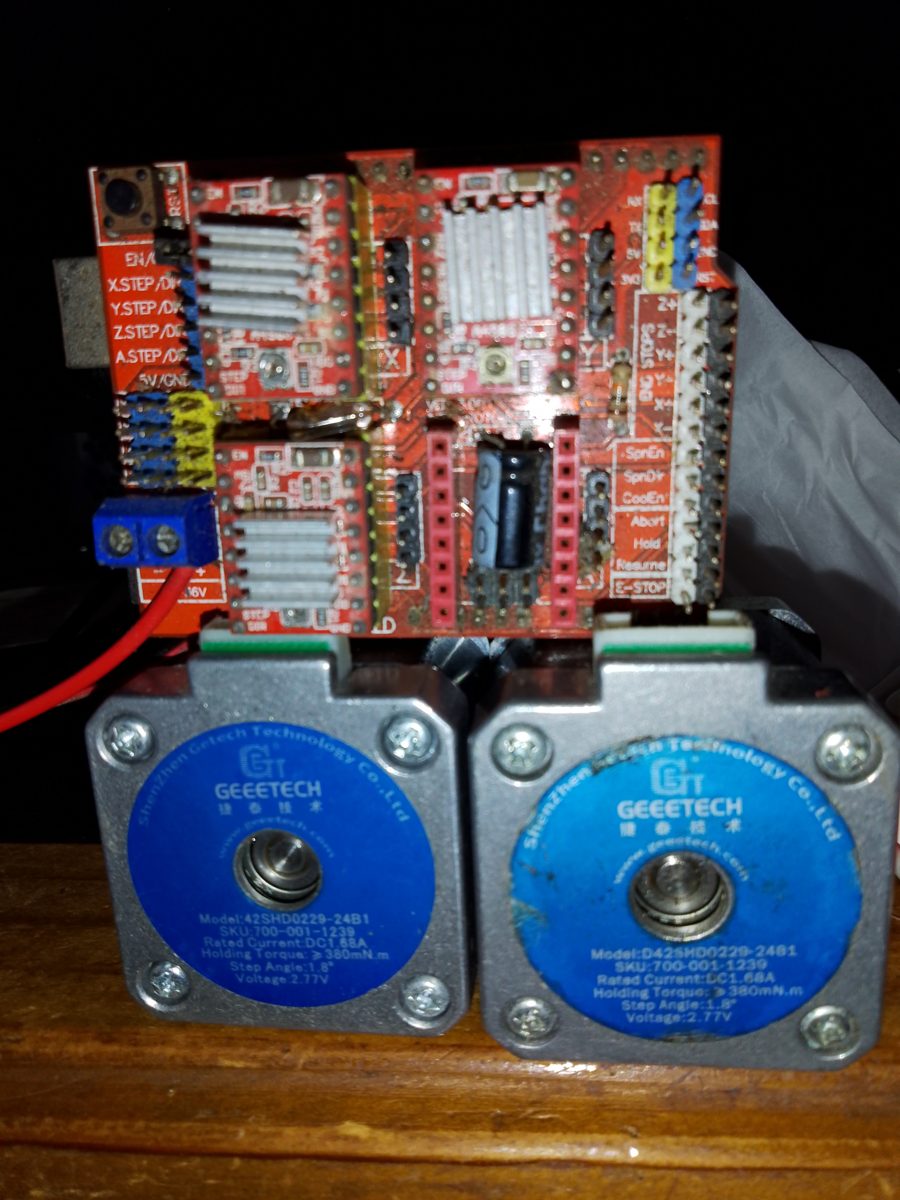
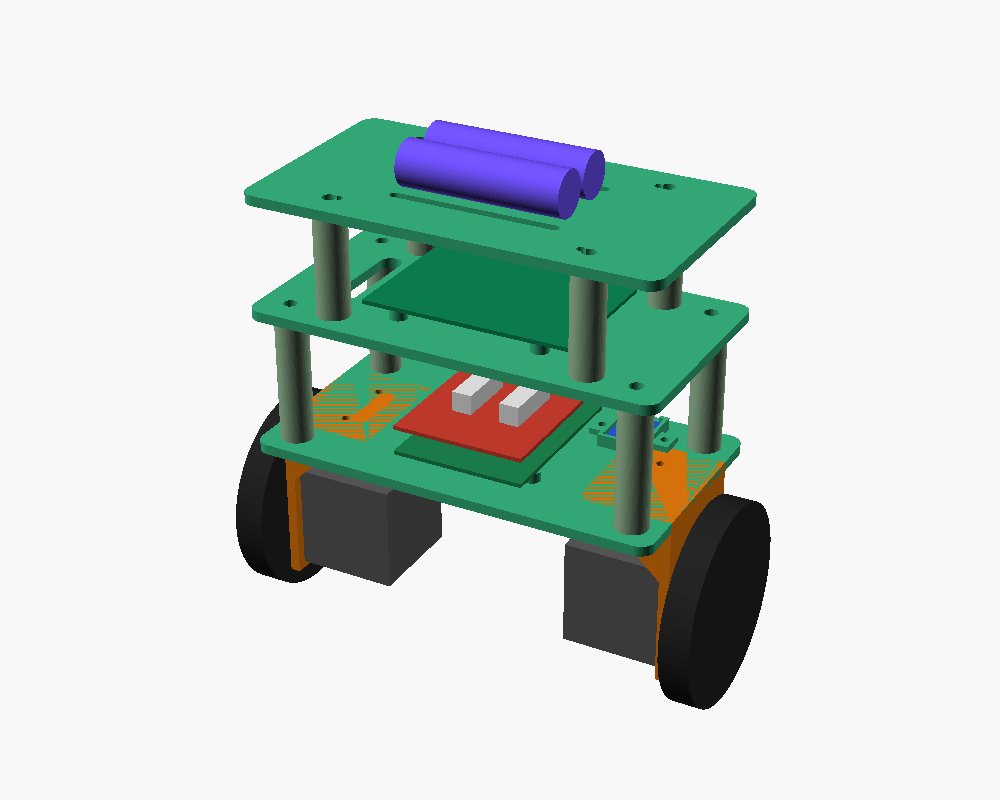
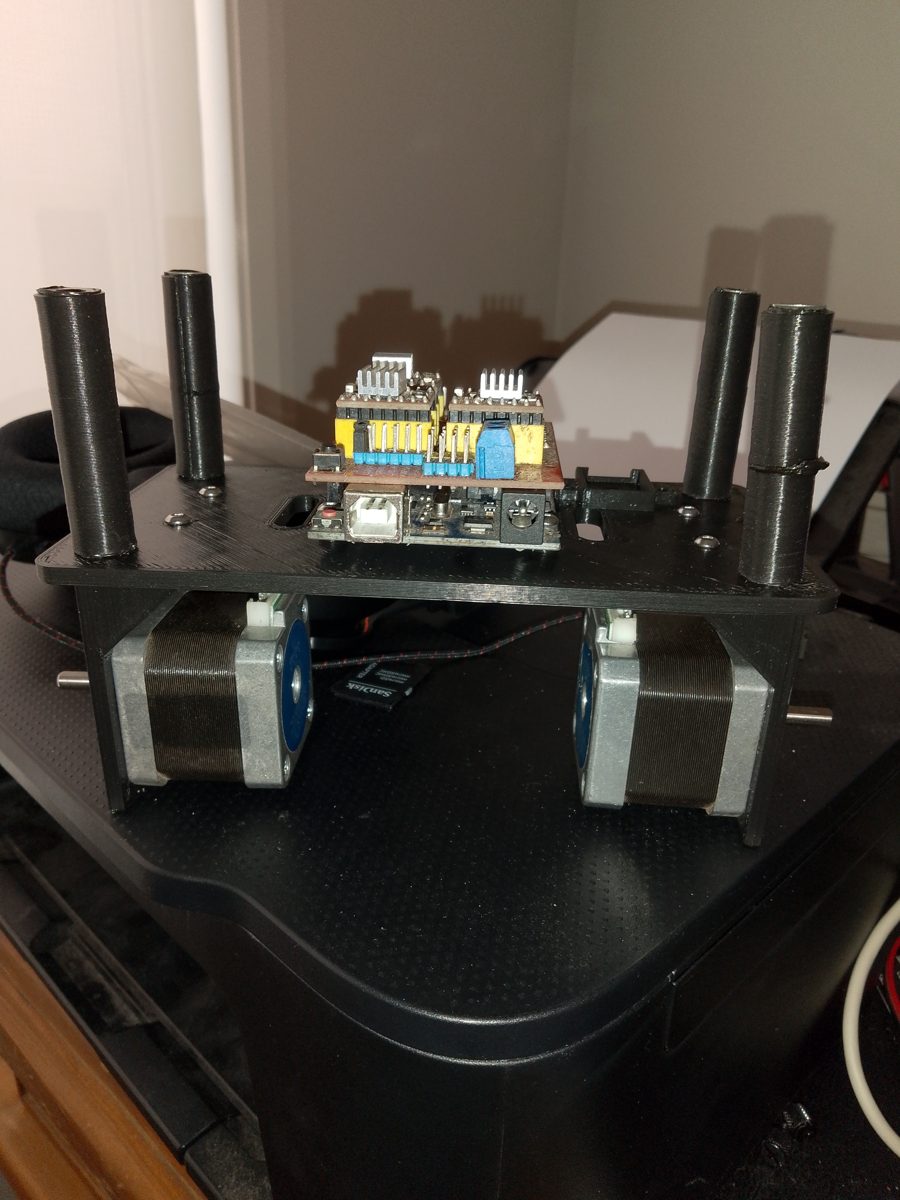
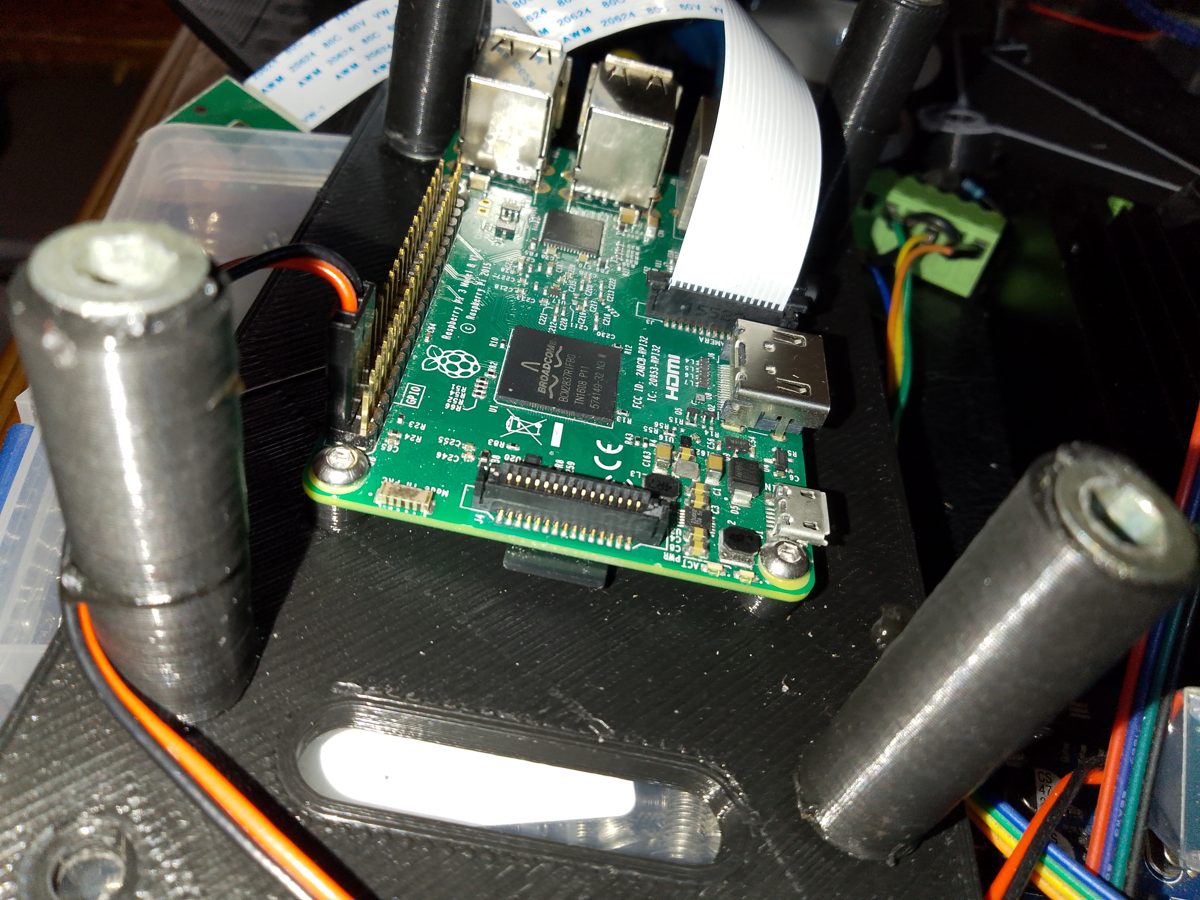
The toy motors made way for two NEMA 17 stepper motors. Steppers have no gear slack, and because they move in counted steps the robot always knows how far its wheels have turned. That meant a new chassis: three printed decks on printed pillars, with brass threaded inserts melted into each end.
Two brains
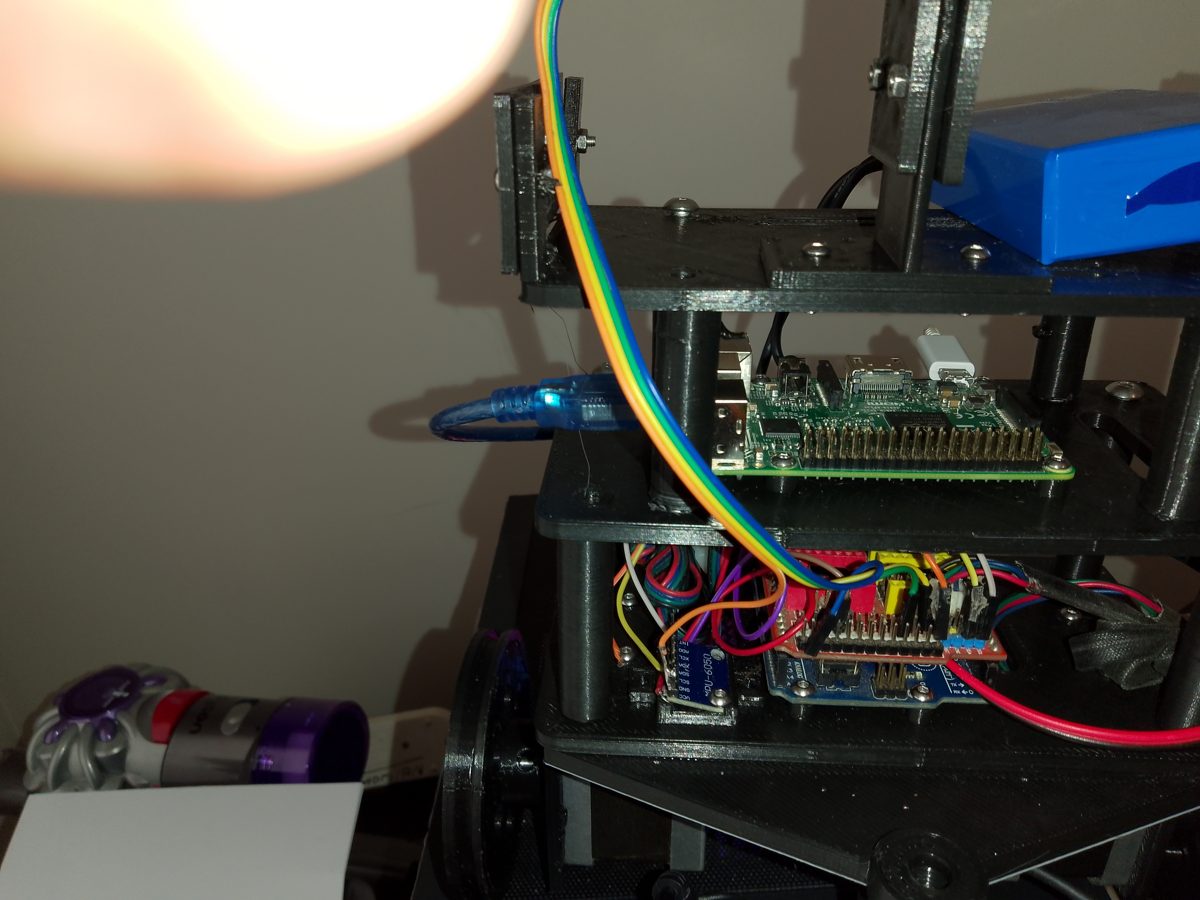
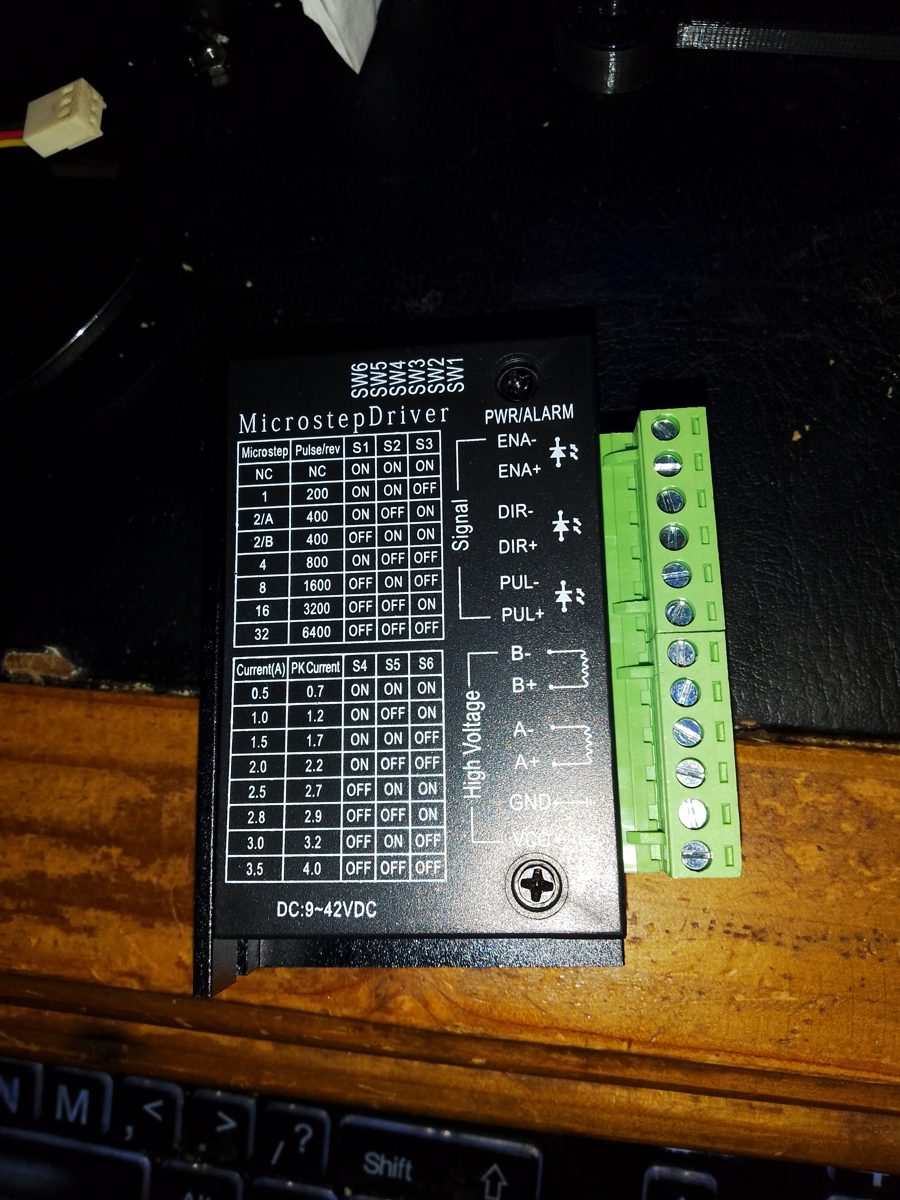
Balancing must never pause, so it gets its own board. An Arduino Uno does nothing but balance: it reads the tilt sensor and drives the motors through two stepper drivers. A Raspberry Pi is the thinker on top, handling the camera, sensors and a live dashboard you can watch over Wi-Fi.
A safer battery
Balancing robots fall over a lot while they learn, so lithium polymer was ruled out as a fire risk. Hobo runs on four sodium-ion cells in series, about 12 volts, with a battery management board guarding every cell.
Hobo gets a neck
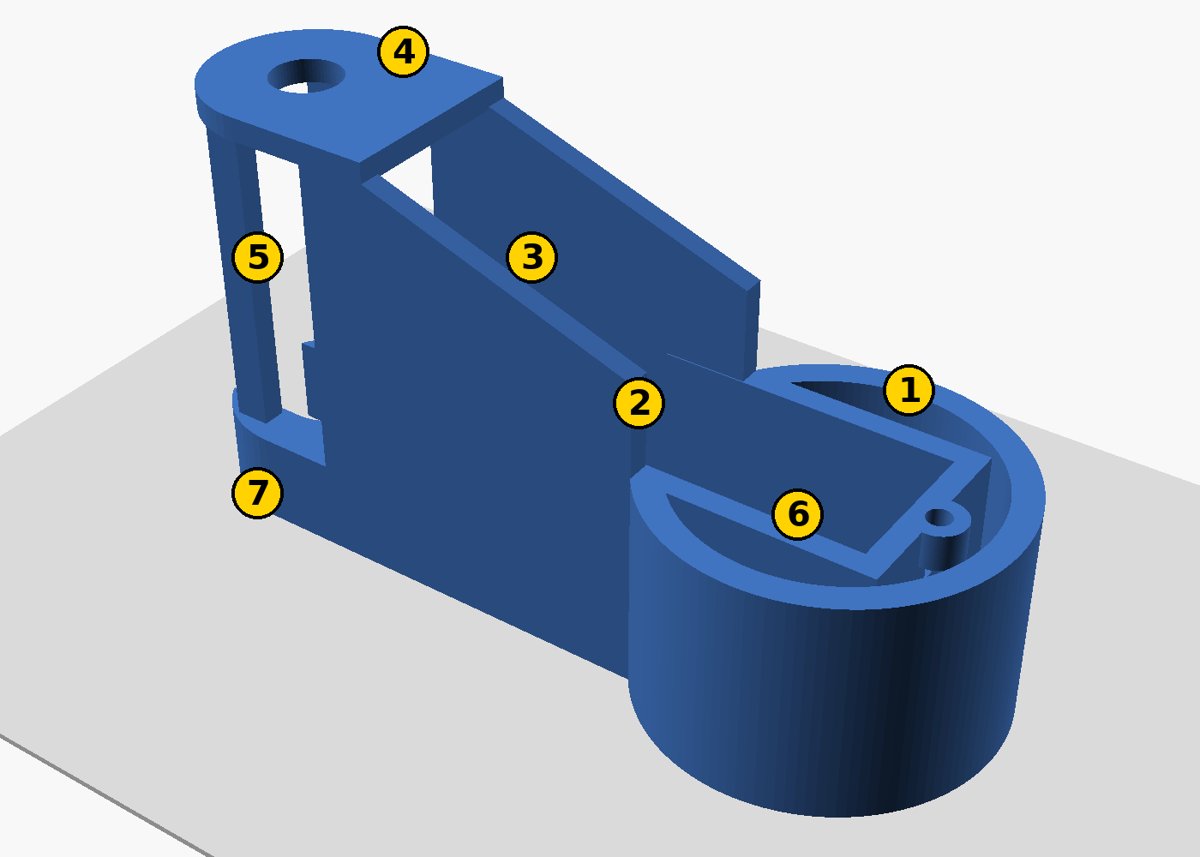
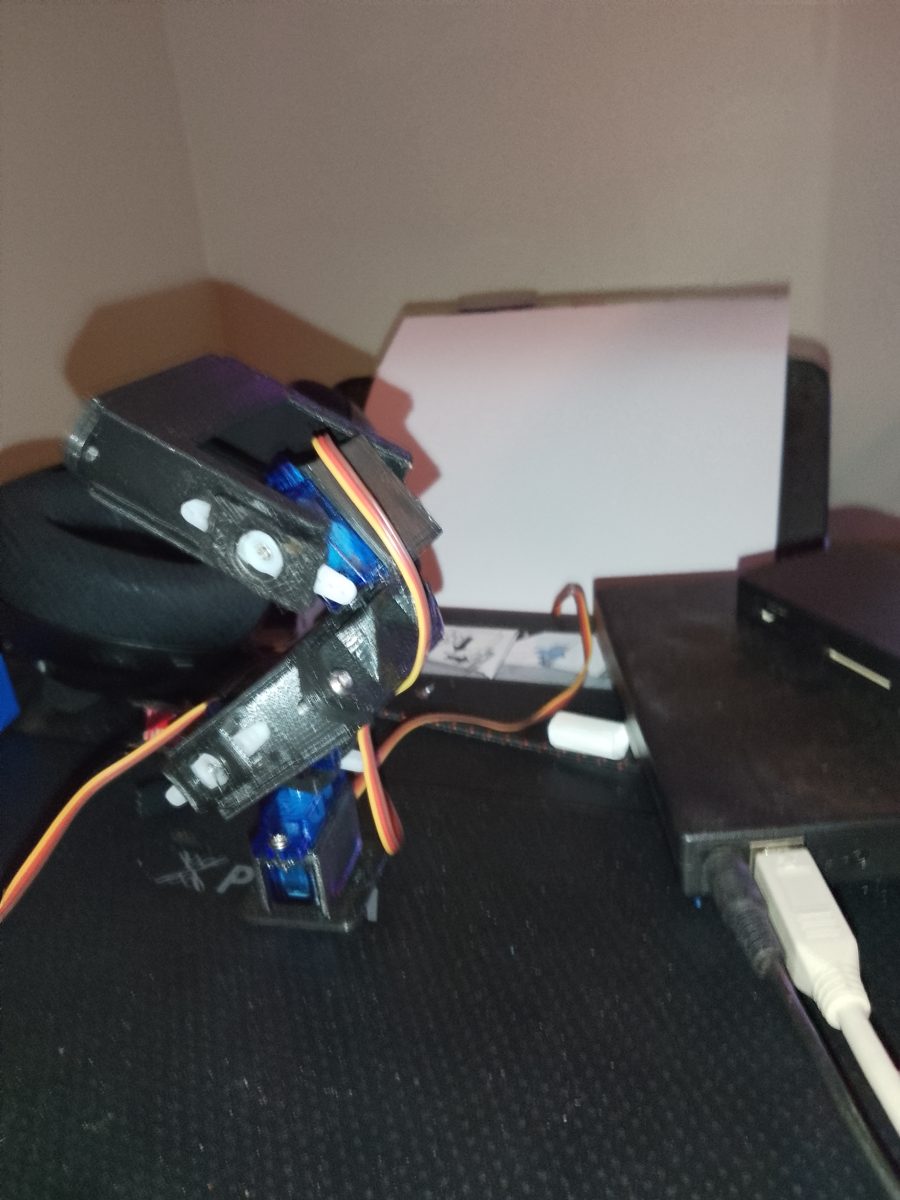
Inspired by the little duck-like droids, Hobo is getting a long servo neck with a camera head. Early versions used small servo boxes joined by printed links.
A better joint
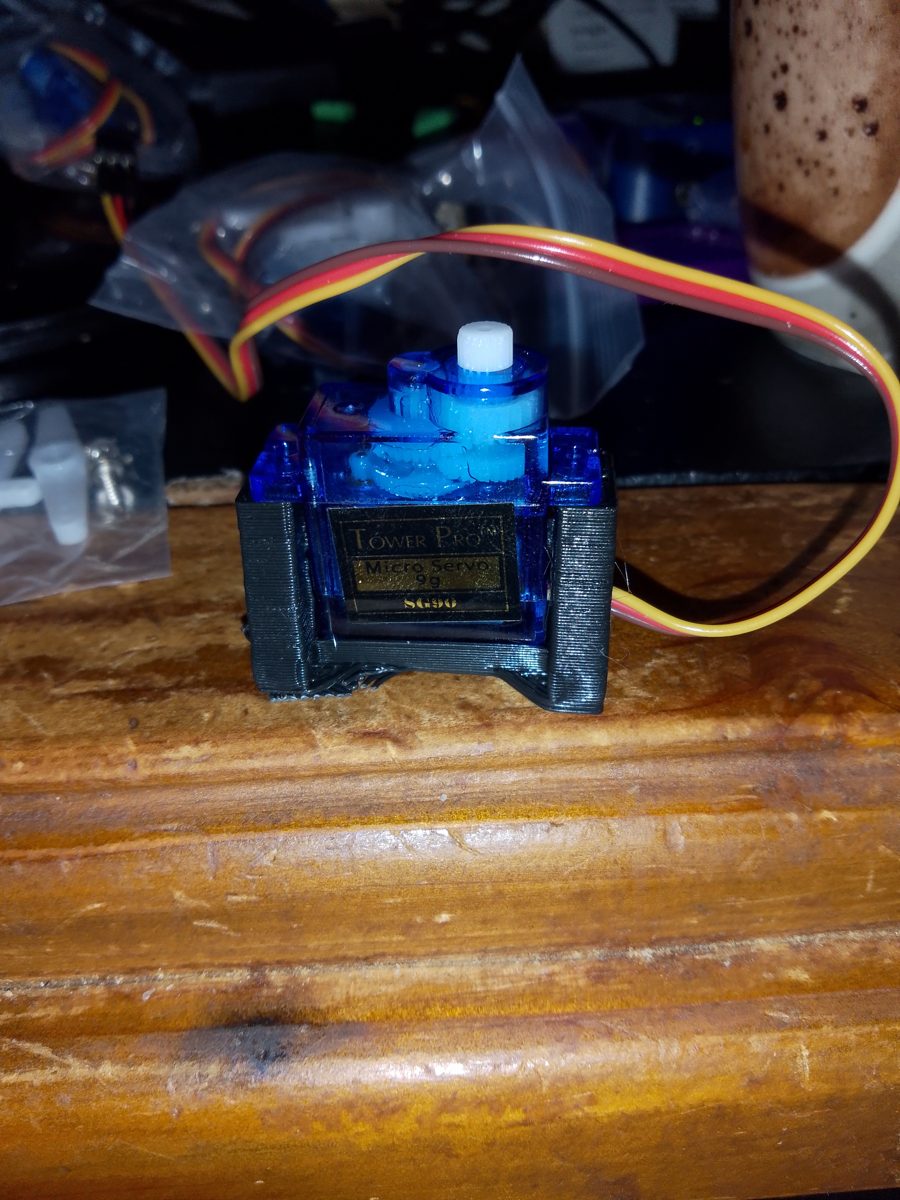
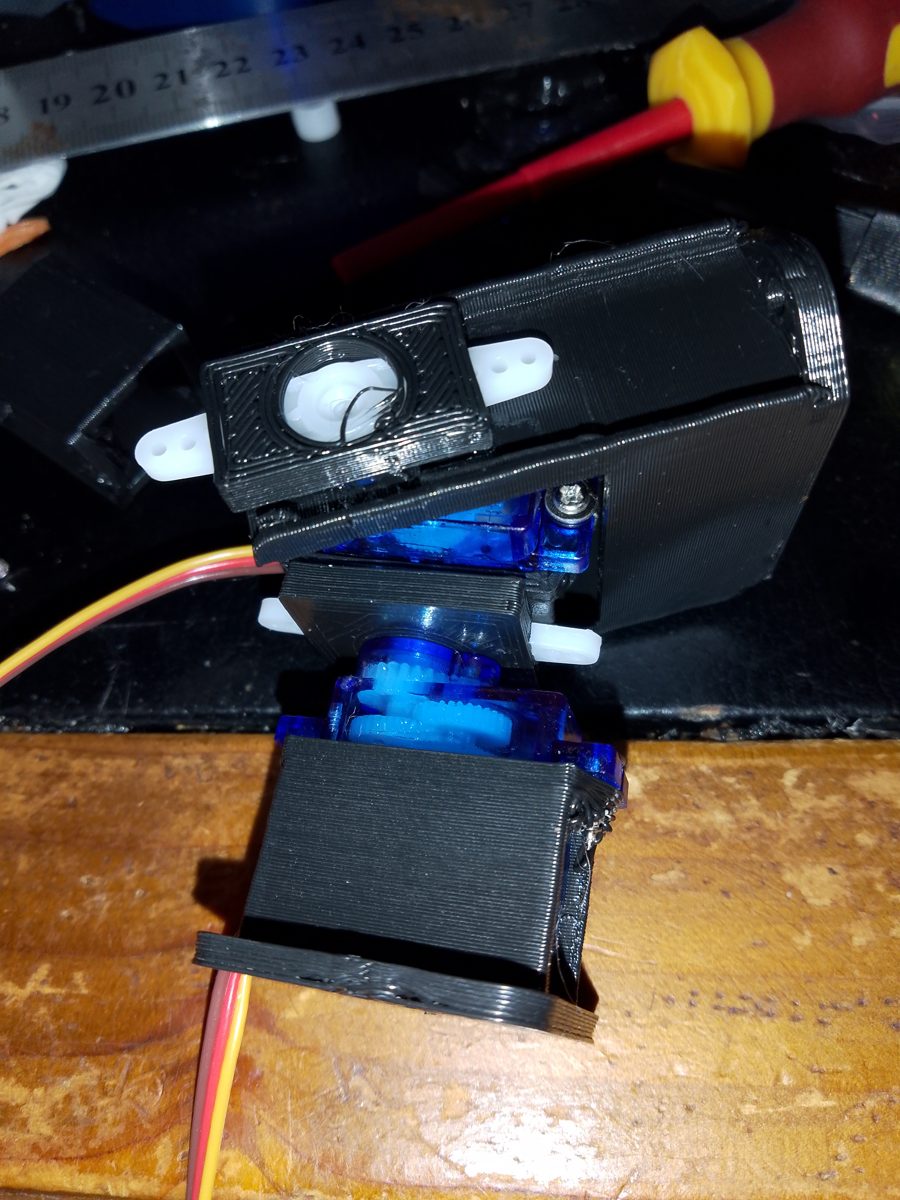
The neck joint went through many versions. In the final design the servo sits in a printed sleeve, and the top plate has a plain 5 mm hole pressed onto the servo shaft while hot, so the shaft cuts its own spline in the plastic. The parts glue together around the servo in minutes, print without support, and the joint runs smooth.
Tests on a Raspberry Pi showed the turning joint sweeping smoothly. The bottom neck joint can lift the whole neck, just about, so it will get a stronger metal-geared servo.